
Creationeering: Middle School
Your student learns to think like an engineer. Online lessons plus a hands-on lab kit, built for grades 6-8.
How many students?
$174 for the first student, $100 for each additional. Kit included for every student.
guarantee
never a subscription
What's included
- Online course access
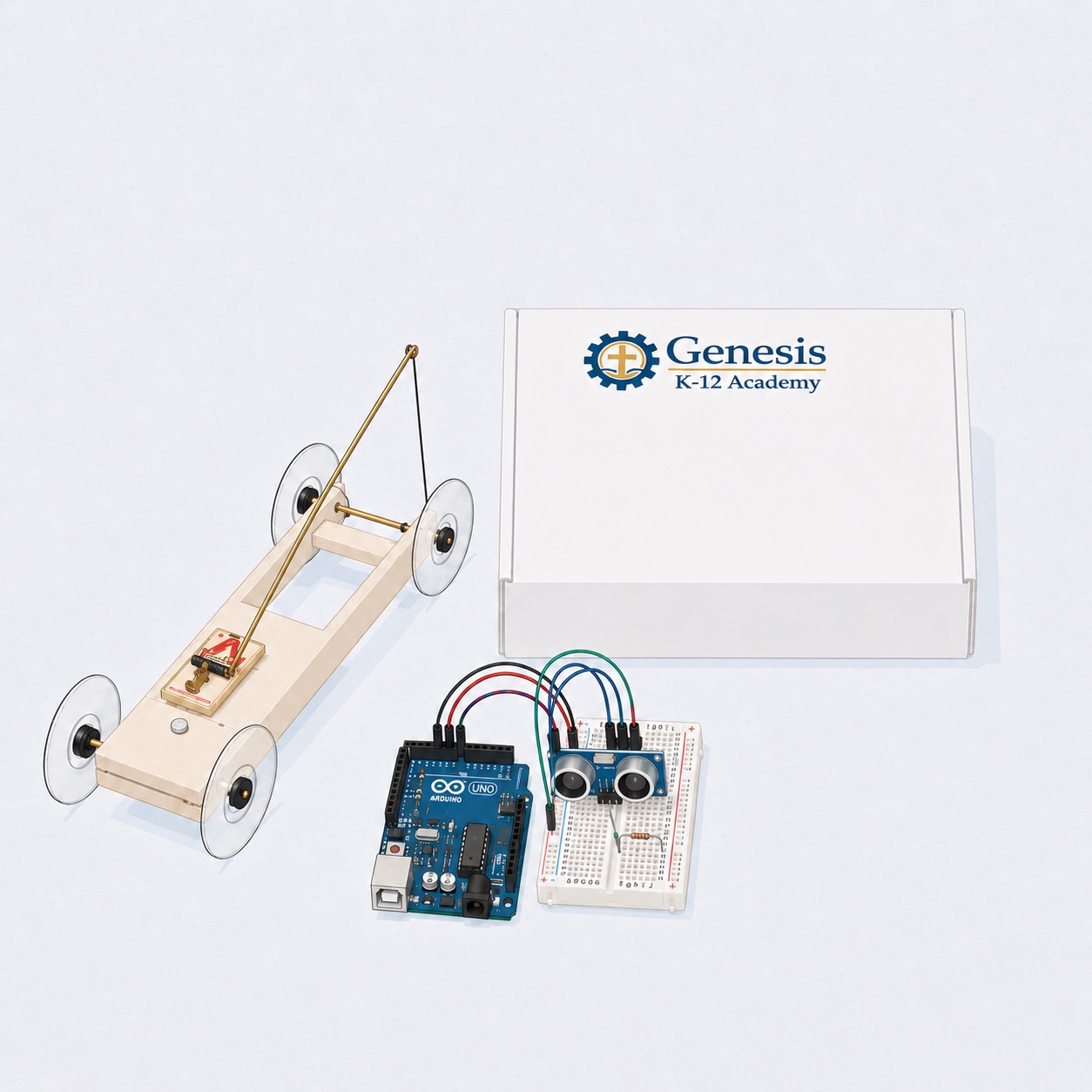
- Mousetrap car lab kit
- Self-grading lessons
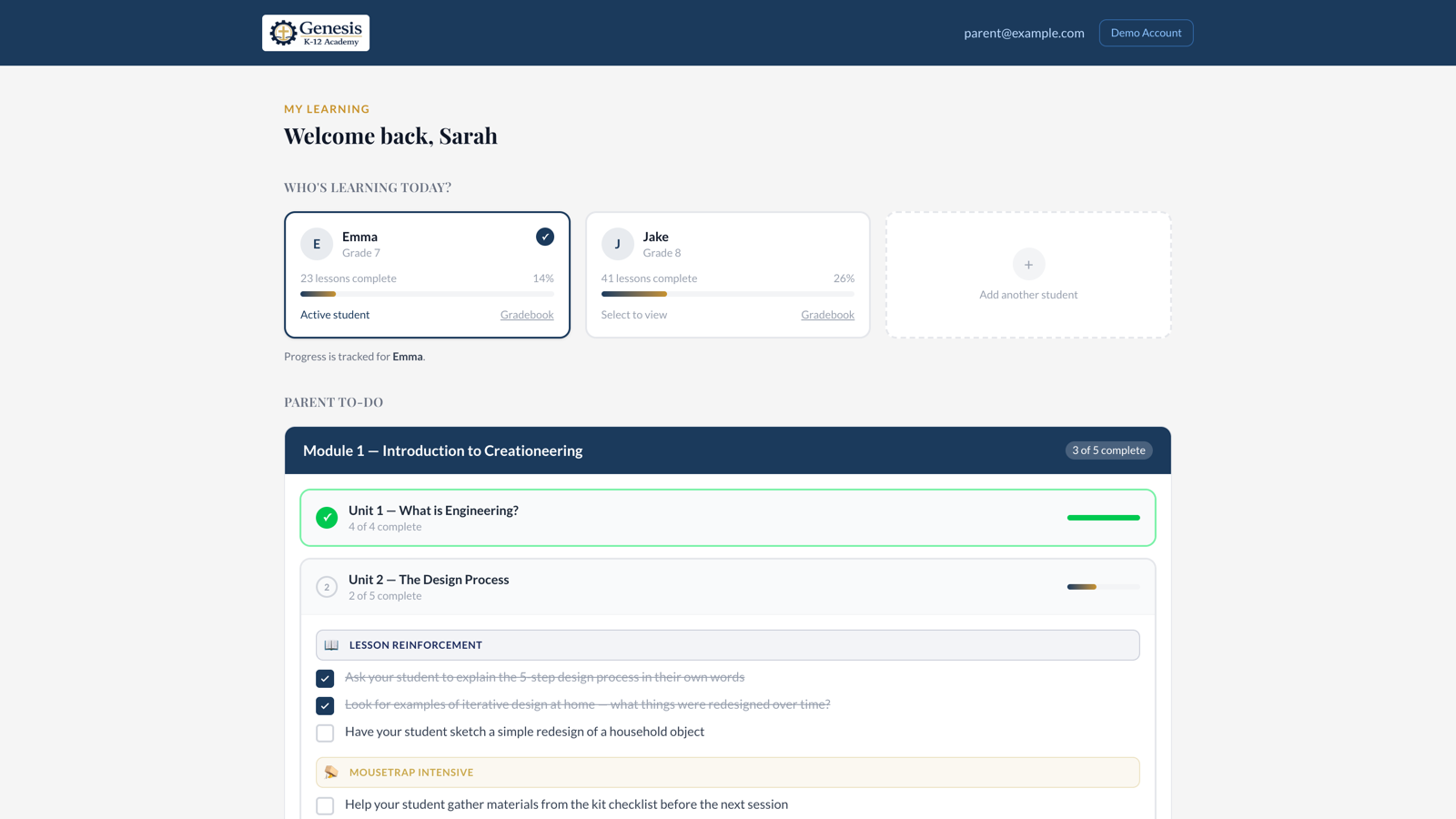
- Parent dashboard
Shipping and delivery
Course access is instant at checkout. The kit ships within 5 business days with tracking. US shipping is included.
Returns and the guarantee
Work through the first two modules with your student. If you are not totally satisfied, we refund every dollar. See how refunds work.
Course access and requirements
Built for grades 6-8, with 18 months of course access. Self-paced, one-time purchase, no auto-renewal. No engineering background needed from the parent.
Time commitment
The full course runs about 90 hours. Take it as a semester at 5 hours a week for 18 weeks, or stretch it across a full year at 2.5 hours a week for 36 weeks. It is completely self-paced, so you set the schedule that fits your family.
What is Creationeering™?
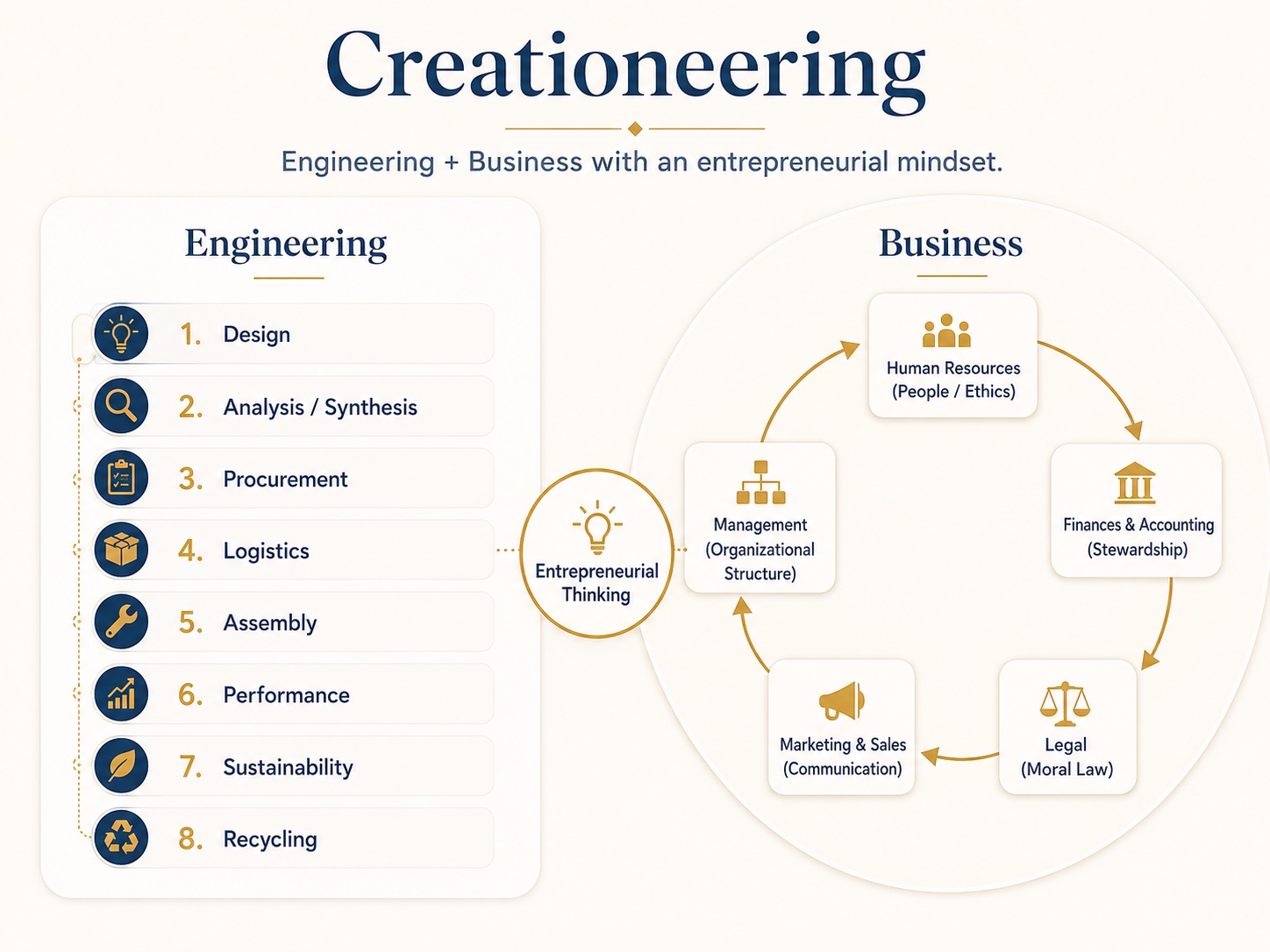
Dr. Mark Horstemeyer's framework for learning engineering and entrepreneurship together, through a Biblical lens. This course is that framework made real for grades 6-8.
- One product, two halves. Online lessons teach the concept; the lab kit is where your student applies what he learned.
- One semester-long project. A mousetrap-powered car built three times, tuned by written predictions and real test data.
- Not yours to teach. Lessons are written for the student, quizzes grade themselves, and your dashboard shows you everything.
- Faith is the frame. Every lesson applies the concept to the build and closes in Scripture.

"God is the Master Engineer. The Creationeering™ system helps students recognize His designs and emulate them in their own creations."
Your instructor
- Dean Emeritus, Liberty University School of Engineering
- AAAS Fellow, American Association for the Advancement of Science
- Former Senior Scientist, Sandia National Laboratories
Do not take our word for it: Liberty University faculty profile · Google Scholar
How the course works
All online, all self-paced, with the building at your kitchen table. Every module mixes three kinds of work: the teaching, the math, and the build.
The teaching
Learn the concept
Short interactive lessons teach one idea at a time, with diagrams, Scripture woven in, and a quick check that grades itself into your parent dashboard. Most run 20 to 30 minutes, and your student works through them on their own.

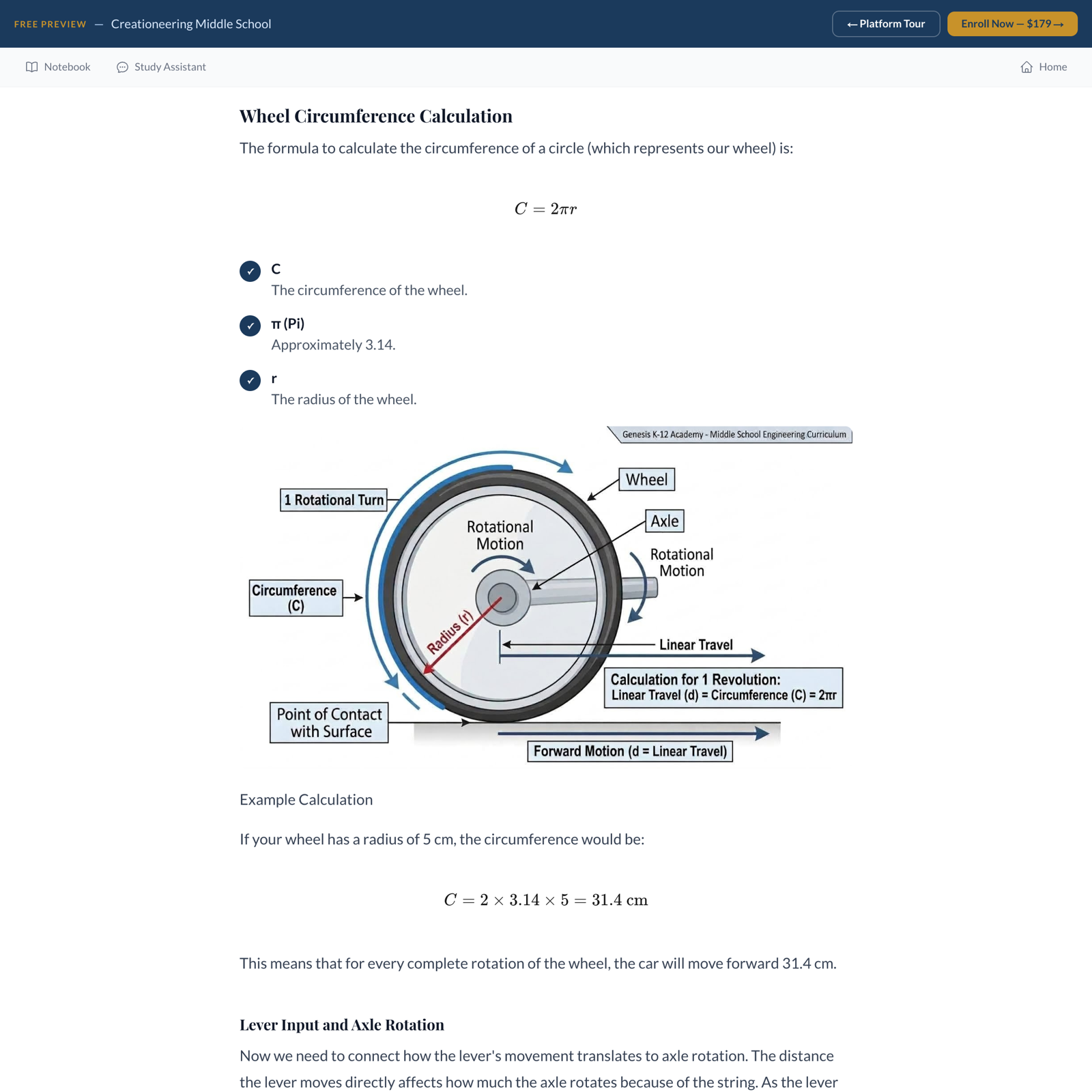
The math
Work the numbers
Lab lessons go a level deeper. Here, students learn the equations and physics behind their upcoming lab. No advanced math is needed to start and our interactive games and simulators help the tricky concepts make intuitive sense.
The build
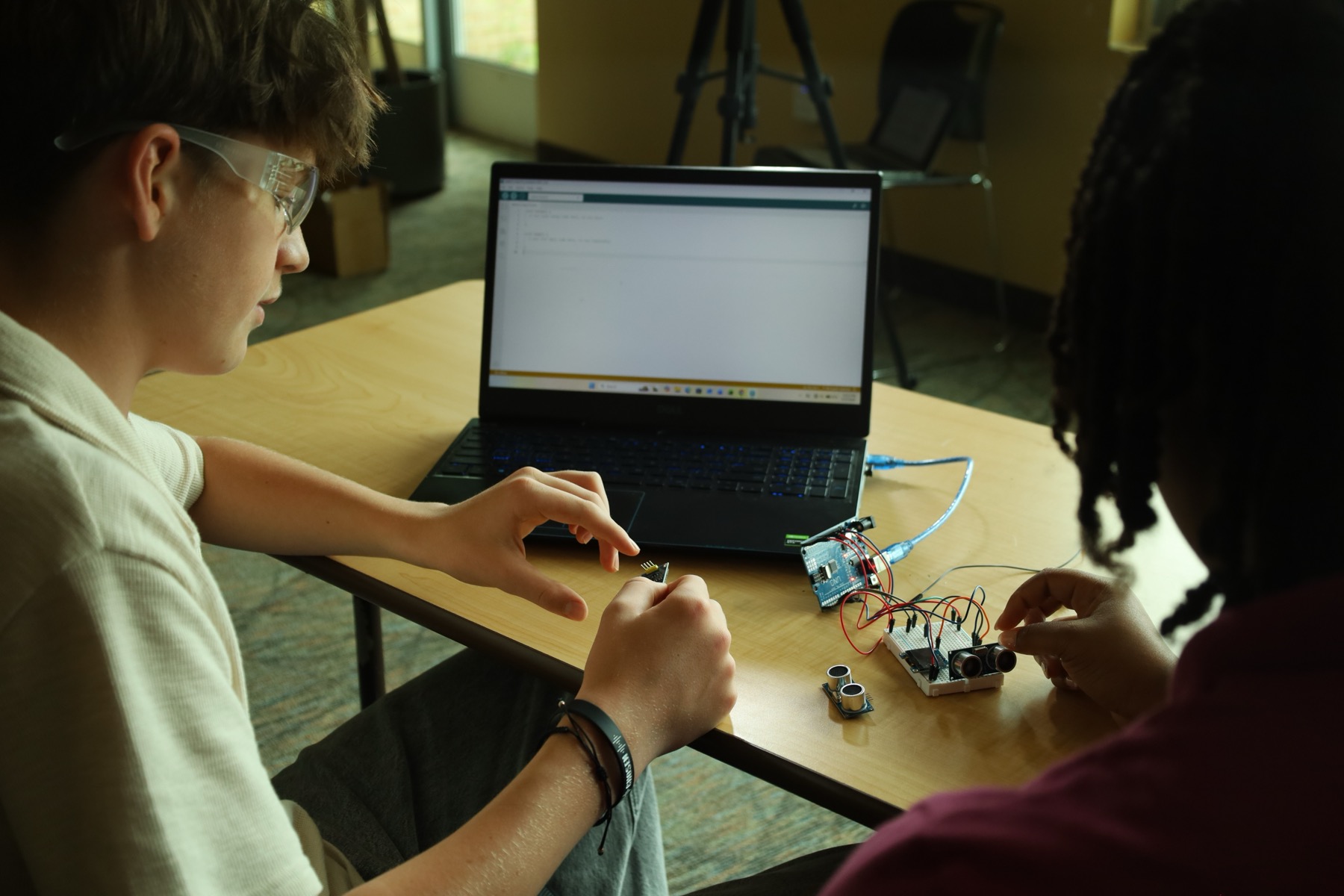
Prove it at the table
The kit comes out and the theory gets tested for real. Step-by-step build instructions live in the platform, and every result gets measured, recorded, and used to make the next build better.
What you'll learn
Six habits your student builds throughout the course.
Define a problem before solving it
- State an objective in measurable terms
- Separate a constraint from a preference
Design under real constraints
- Generate more than one workable concept
- Choose between them for stated reasons
Predict before building
- Use math and physics to estimate an outcome
- Say what you expect to happen and why
Test, measure, and iterate
- Run a fair test and record real numbers
- Change one variable at a time
Document like an engineer
- Write up the work so a stranger could repeat it
- Sketch, annotate, and date the work
Steward what you build
- Account for cost, materials, and waste
- Connect the work to a Biblical view of dominion and care
How much time does it take?
About 90 hours of coursework, fully self-paced. Use our suggested pacing below or create your own schedule.
One semester
The course as designed: a focused fall or spring semester, about an hour a day.
The full school year
The same course at half the weekly load. With 18 months of access, a slow week never costs you anything.
And your time as the parent?
About ten minutes a week. The lessons do the teaching, the quizzes grade themselves, and the dashboard hands you a short weekly to-do list. You check in; you do not prepare, teach, or grade.
Course Overview
01Thinking Like an Engineer16 lessons
How engineers think before they build: objectives, constraints, and variables, with the scientific method behind every claim. The first prototype car rolls here too, because tuning needs a baseline.
02Design14 lessons
Technical sketching, real forces (F = ma), and famous engineering failures teach how design decisions get made. Your student generates competing concepts and picks one for reasons they can defend.
03Analysis and Synthesis22 lessons
The heaviest science in the course: energy, friction, stress, and statistics run on your student's own test data, one variable at a time. It closes with a signed gate review, the same checkpoint discipline aerospace teams use.
04Procurement11 lessons
Every part of the car gets sourced, costed, and inspected against a real bill of materials. Budgets, material trade-offs, and quality checks: where engineering meets money.
05Fabrication7 lessons
How parts get made and made right: cutting, sanding, and finishing to a stated tolerance, with the safety procedure written before the work starts.
06Logistics18 lessons
Project management for real: a build schedule with the critical path marked, a supply chain map behind their own parts, and a risk plan with backups ready.
07Assembly18 lessons
The main build. Frame, axles, power system, and a working braking system come together subsystem by subsystem, with alignment checks and quality gates at every step.
08Performance18 lessons
Write a test protocol, measure a baseline, then predict every change before running it. Tuning happens with data: repeated trials, averages, and keep-or-revert decisions the numbers make.
09Decommissioning35 lessons
No product just gets thrown away. The car makes one final recorded run and is taken apart to a real disassembly plan, and the course closes with Parent Pitch Night: your student presenting to you as the investor.
What's in the box
Every part for the whole semester arrives in one labeled box. This means no hardware store runs for Mom or Dad.
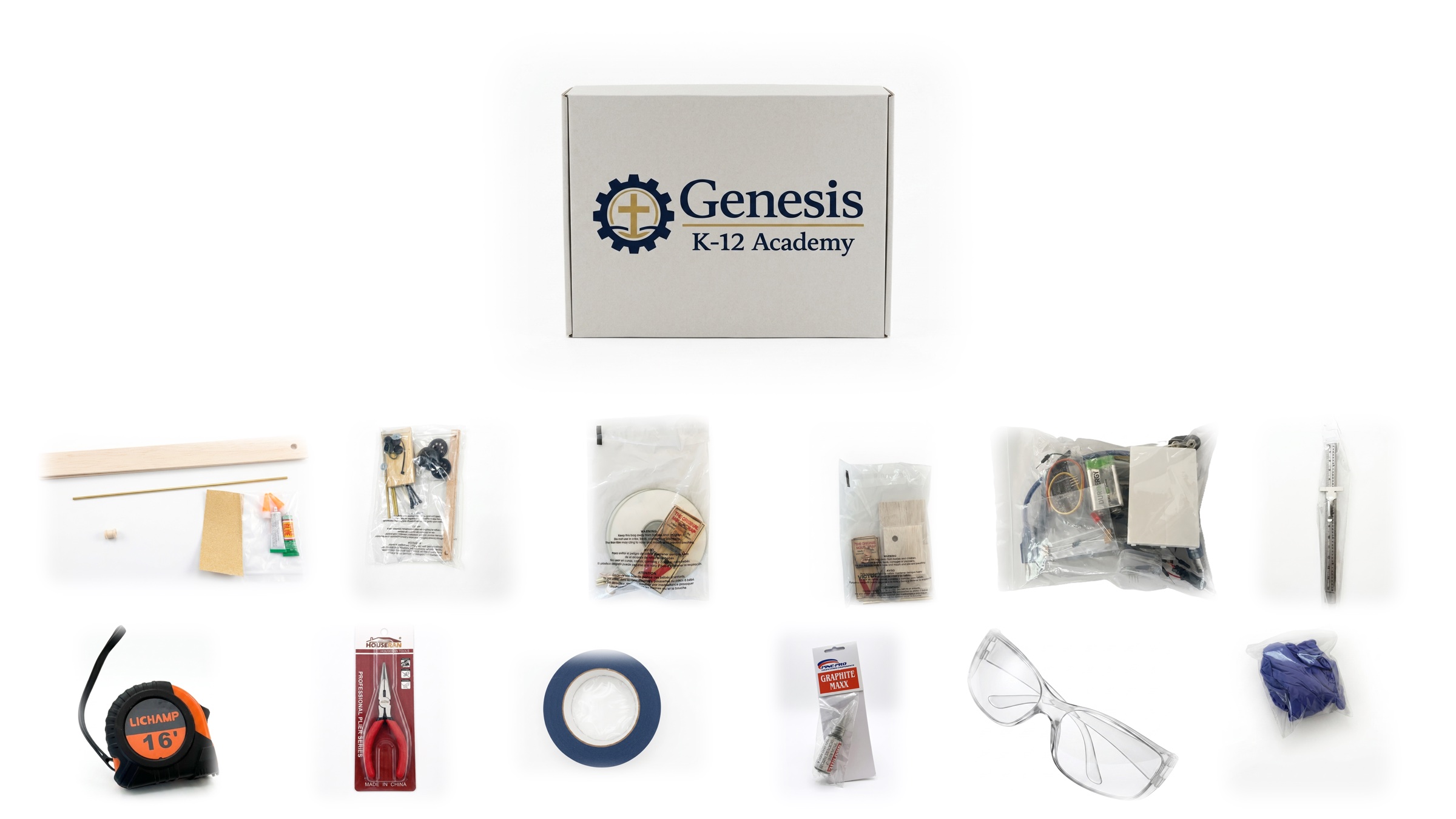
- 1The cars. Mousetrap "engines", balsa rails, brass and wooden axles, wheel sets, lever arm and string.
- 2The electronics. Arduino board, breadboard, ultrasonic distance sensor, OLED readout, wiring and battery.
- 3The tools. Needle-nose pliers, tape measure, ruler, sandpaper in three grits, superglue.
- 4The safety gear. ANSI-rated safety glasses and nitrile gloves.
- 5The test equipment. Calibration weights, balloons for traction experiments, painter's tape to mark the track.
- 6The spares. A second mousetrap, extra dowels and string, because first builds break.
Ships free within 5 business days, with tracking. Course access opens the moment you buy.
Our 2-Module Guarantee
Try the first two modules with your student. If you don't feel it was worth every dollar, email us for a full refund. You just cover return shipping. No hoops. No questions.
See DetailsFAQ
I never took engineering. Can I actually run this?
You do not teach it. Dr. Horstemeyer introduces each topic and the written, interactive lessons do the teaching. Your job is about ten minutes a week: the Parent Guide System gives you a weekly to-do list and a concept sheet, and the lessons grade themselves into your parent dashboard.
Will this become my second job?
No. The quizzes self-grade, the dashboard shows you exactly where your student is, and your weekly checklist is short by design. If it ever takes more than a few minutes a week, something is wrong and we want to hear about it.
Is this real engineering or crafts?
It is the same 8-step design process used in university engineering programs, taught by an AAAS-Fellow engineer, with rubrics, an engineering vocabulary scope, and documentation your student keeps like a working engineer. See the sample lesson before you pay a dollar.
Will it stay Biblically sound?
The course is built on Creationeering, Dr. Horstemeyer's framework for engineering within God's design. Our statement of faith and a full sample lesson are public. You will never have to quietly re-interpret a lesson.
What if my kid is not strong in math yet?
The course is scaffolded for grades 6-8. No advanced math is required to start; the math shows up inside builds, where it makes sense.
What about my other kids?
Add another student with their own kit for $100. Younger siblings watching the build is, per every homeschool review we have read, unavoidable and free.
Start the first lesson today.
Enroll today, start the first lesson today, and the kit is on your build table next week.
$174 for 1 student while the 30 launch kits last.